Build Matt Ltd.

  May 20, 2026
Share At:
Google AI ChatGPT Grok Perplexity

Listening Article

AI Summary

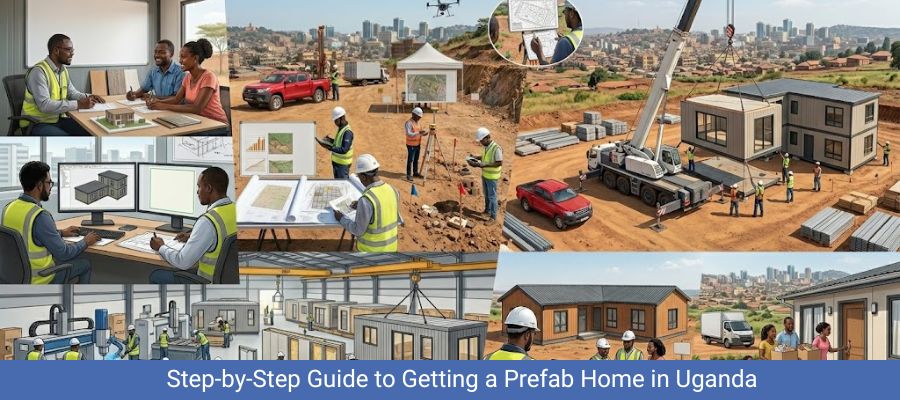
Getting a prefab home in Uganda is easier than most people think – but understanding the process helps you plan better and avoid costly surprises. This guide walks through every stage of Build Matt Ltd.’s proven approach: from initial consultation and site assessment, through design approval and factory fabrication, all the way to on-site assembly, final inspection, and move-in. For anyone exploring prefabricated homes or prefabricated houses in Uganda, this step-by-step breakdown will help you make an informed and confident decision.

Why Understanding the Process Matters

Many Ugandan homeowners are put off by prefab homes simply because they are unfamiliar with how the process works. Unlike conventional construction where you hire a site foreman and watch bricks go up day by day, prefab home builders like Build Matt work differently – and much more efficiently. When you understand each step, you can set realistic expectations, plan your budget accurately, and coordinate your move with confidence.

Let’s Discuss! Request a Call Now!
WhatsApp Call Now!

Step 1: Initial Consultation and Needs Assessment

Every Build Matt prefab home project begins with a detailed consultation. The Build Matt team meets with the client – in person at their Kampala office or remotely – to understand:

  • The intended use of the home (permanent residence, rental, worker housing, holiday home)
  • The number of rooms, bathrooms, and special features required
  • The plot size and location (Kampala, Entebbe, Jinja, rural areas, or other regions)
  • The available budget and financing situation
  • Timeline requirements and any site-specific constraints

This consultation is free and non-binding. Build Matt’s experienced prefab home contractors use this information to recommend the most suitable structural system, materials, and design approach.

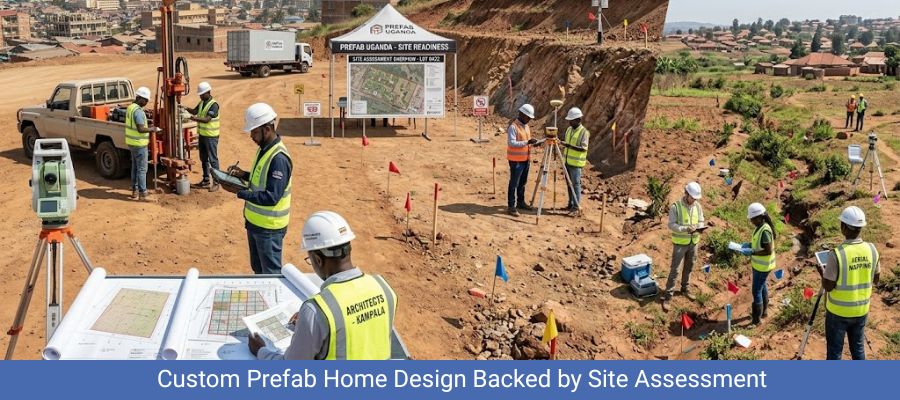
Step 2: Site Assessment

Before any design begins, Build Matt’s team conducts a professional site assessment of the client’s plot. This involves:

  • Soil and ground bearing capacity evaluation
  • Topography and drainage analysis
  • Accessibility assessment for delivery vehicles and assembly equipment
  • Review of local planning and zoning requirements

The site assessment ensures that the prefab home is engineered for the specific conditions of your plot – whether it is flat urban land in Wakiso, a hillside in Kabale, or a rural plot in Gulu. Build Matt’s prefab home builders have extensive experience across Uganda’s diverse terrain and climate zones.

Step 3: Design and Engineering

Based on the consultation and site assessment, Build Matt’s in-house architects and structural engineers develop a custom design for your prefab home. This includes:

  • Floor plan layouts with room dimensions
  • Structural engineering drawings and load calculations
  • Roof design (pitched, flat, or hipped) suited to your climate zone
  • Electrical, plumbing, and ventilation schematics
  • 3D visualisations to help clients see the finished home before production begins

Clients review and approve the design before fabrication begins. Any changes or adjustments are made at this stage – changes after fabrication begins are costly. Build Matt’s design team is experienced in balancing aesthetics, functionality, and budget for Ugandan clients.

Step 4: Material Procurement and Quality Checking

Once the design is approved, Build Matt procures the materials needed for your prefab home. All structural steel is sourced from certified suppliers meeting international quality standards. Insulated panels, roofing sheets, windows, doors, and finishing materials are all procured and quality-checked before fabrication begins.

Build Matt’s quality control team inspects all incoming materials against the project specifications – this is one of the major advantages that prefab home manufacturers like Build Matt have over uncoordinated site-based construction.

Step 5: Factory Fabrication

This is where the magic happens. Unlike conventional construction exposed to weather, theft, and inconsistent site labour, Build Matt fabricates your prefab home components in their controlled workshop facility in Kampala. Steel frames are cut, welded, and treated. Panels are assembled and tested. All components are fabricated to exact tolerances and numbered for efficient on-site assembly.

Fabrication typically takes 2–5 weeks depending on the home’s size and complexity. During this time, site preparation (foundation and utility connections) can happen simultaneously – meaning you lose no time waiting.

Step 6: Foundation and Site Preparation

While your prefab home components are being fabricated, the client’s plot is prepared. Build Matt can manage site preparation or coordinate with the client’s preferred civil contractor. Site preparation includes:

  • Excavation and levelling
  • Concrete foundation or pile works based on soil type
  • Utility trenches for water, electricity, and drainage

Build Matt’s engineers provide detailed foundation specifications to ensure the prefab structure is correctly supported regardless of soil conditions.

Step 7: Delivery and On-Site Assembly

Once fabrication is complete and the foundation is ready, Build Matt delivers all prefab home components to the site using their logistics fleet. Assembly is carried out by Build Matt’s trained installation crew – no guesswork, no subcontracting to unknown workers.

A typical prefab home from Build Matt can be fully assembled in 1–3 weeks on-site. The structural frame goes up first, followed by wall panels, roof structure, doors, windows, and internal finishes. The speed and precision of on-site assembly is one of the most visible advantages of working with professional prefab home contractors versus managing conventional construction.

Step 8: MEP Installation (Mechanical, Electrical & Plumbing)

After the structural shell is complete, Build Matt’s team or approved subcontractors install the electrical wiring, plumbing systems, and ventilation as per the approved schematics. All work is done to Ugandan electrical and plumbing codes, with safety as the top priority.

Quick Response Guaranteed
Email Us Now!

Step 9: Finishing and Handover

The final stage includes interior and exterior finishing – plastering or cladding, floor screed or tiles, painting, fitting of bathroom fixtures, kitchen units, and final inspections. Build Matt conducts a thorough quality walkthrough with the client before handover. Any snags or adjustments are addressed before keys are handed over.

Build Matt Delivers: A fully completed, move-in-ready prefab home – designed, manufactured, delivered, and assembled by one team, with one point of accountability.

Frequently Asked Questions (FAQs)

For a standard prefab home, the full process from initial consultation to move-in typically takes 8–14 weeks, depending on design complexity, site conditions, and the client's responsiveness during the approval stages.

No. Build Matt provides a complete turnkey service - their team handles everything from design and fabrication to delivery, assembly, and finishing. You do not need to manage separate contractors.

Changes are best made before fabrication begins. Once fabrication starts, modifications may incur additional costs and delay the timeline. Build Matt's design team works thoroughly with clients during the design stage to minimise late changes.

Yes. Build Matt delivers and assembles prefab homes across Uganda, including remote areas. Their prefabricated components are transportable by road to any accessible location. Logistics costs may vary by distance.

Build Matt designs the appropriate foundation based on a site-specific soil assessment. Options include conventional concrete strip foundations, raft slabs, or pile foundations for challenging ground conditions.

Build Matt stands behind their work and provides warranties on structural components and workmanship. Clients should confirm specific warranty terms during the consultation process.