Read Our Article
Steel Carport Installation Process in Uganda: From Site Preparation to Final HandoverHow to Choose the Right Shade Structure for Balconies, Windows and Outdoor Spaces
August 12, 2026
Share At:




Listening Article
AI Summary
Choosing the right shade structure depends on the location of the space, its intended use, required shade coverage, material selection, structural support, durability, ventilation, available space and installation requirements. Balconies, windows and outdoor areas each have different shading needs based on sun exposure and weather conditions in Uganda. Build Matt helps property owners assess these factors and fabricate practical, durable shade solutions suited to each building.
Selecting the Right Shade Structure for Your Property in Uganda
A shade structure needs to do more than block sunlight. It needs to suit the building it is fitted to, withstand local weather conditions and remain functional over time.
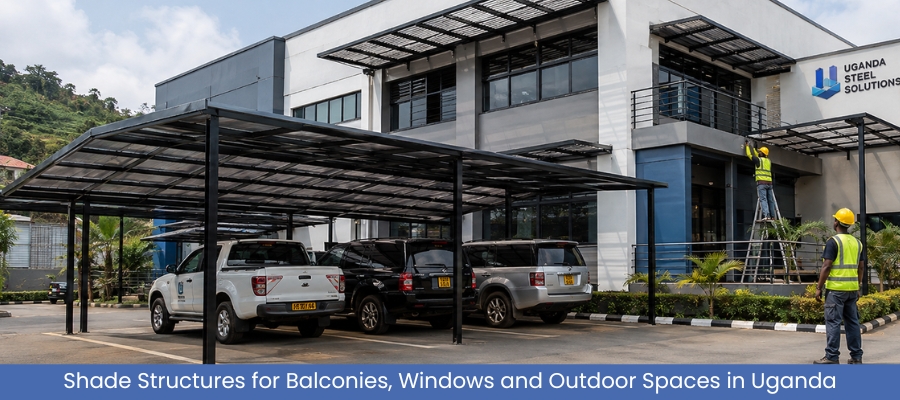
In Uganda, properties face strong sun exposure for much of the year alongside seasonal heavy rain. A shade structure Uganda property owners choose needs to manage both conditions without restricting ventilation or affecting the building’s appearance.
The right choice depends on several factors:
- The building type and its design
- The dimensions of the balcony, window or outdoor area
- Exposure to sun and prevailing weather
- How the space will be used
- Available structural support
- Maintenance expectations
A balcony shade Uganda homeowner needs will differ from a restaurant shed Uganda hospitality business requires, even where both structures appear similar. This article works through the key decision factors involved in selecting a balcony shade, window shade, window shed or outdoor shade structure, and explains how Build Matt supports each stage of the process.
Speak with an Expert
 Call Us Now!
Why Choosing the Right Shade Structure Matters for Outdoor Spaces?
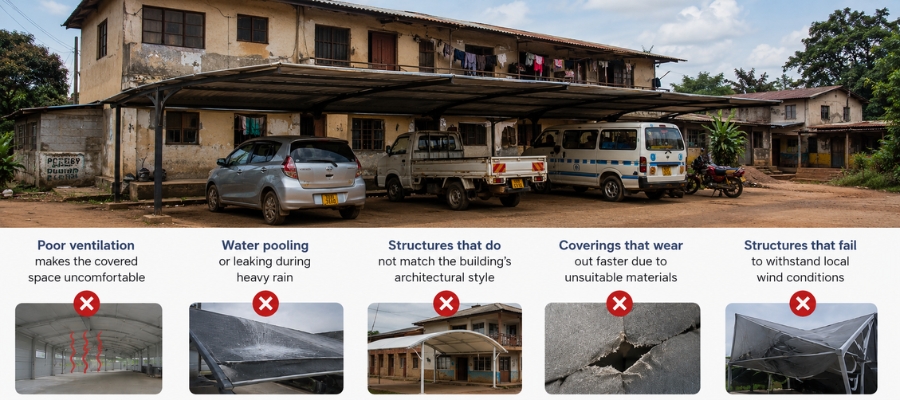
Choosing an unsuitable shade structure often leads to problems that only appear after installation, such as:
- Poor ventilation that makes the covered space uncomfortable
- Water pooling or leaking during heavy rain
- Structures that do not match the building’s architectural style
- Coverings that wear out faster than expected due to unsuitable materials
- Structures that fail to withstand local wind conditions
These outcomes are usually avoidable with proper planning before installation. A shade structure Kampala property owners select should reflect the specific conditions of the site, not a generic design applied without assessment.
Build Matt begins each project with a review of the property’s dimensions, exposure and intended use, so the proposed structure is matched to the actual site rather than a standard specification.
Balcony Shade vs Window Shade: Understanding the Main Differences
A balcony shade and a window shade serve different purposes.
Balcony shade:
- Covers a usable outdoor floor area
- Needs to accommodate people, furniture and movement underneath
- Often spans a wider area, requiring more structural planning
Window shade:
- Protects a window opening from sun and rain
- Generally smaller and fitted close to the window
- Requires lighter support in most cases
| Factor | Balcony Shade | Window Shade |
|---|---|---|
| Coverage Area | Larger, often projecting outward | Smaller, close to the opening |
| Structural need | Higher, due to span and usage | Generally lower |
| Common use | Seating, dining, relaxing | Reducing glare, heat and rain entry |
Understanding which category applies to a project is the starting point for choosing an appropriate design. Build Matt evaluates the dimensions, exposure and intended use of each balcony and window separately, rather than applying the same specification to both.
Key Factors to Consider When Selecting a Balcony Shade
Selecting a balcony shade structure involves working through several practical considerations.
Site conditions to assess:
- Balcony dimensions, including width, depth and available height
- Sun orientation and how exposure changes through the day
- Wind and rain exposure at the balcony’s location
- Intended use, such as dining, relaxing or storage
- Condition of the fixing surface, including walls, parapets or slabs
- Realistic maintenance expectations for the household or business
Balconies vary between buildings and even between apartments in the same block, depending on orientation and floor level. A balcony shade Kampala apartment owners select on a higher, more exposed floor may need different consideration compared to a ground floor balcony.
Build Matt assesses each balcony individually, considering its dimensions, exposure and practical shading requirements, so the proposed structure fits the specific space rather than a standard layout.
Our Other Product
Steel Doors, Windows, Security Door and Gates, Rolling ShuttersChoosing the Right Materials for Window and Balcony Shade Structures
Material selection affects durability, appearance and maintenance.
Commonly used materials:
- Treated fabric coverings, offering a lighter appearance
- Polycarbonate sheeting, suited to rain protection with light transmission
- Aluminum framing, used for lighter structural support
- Steel framing, used for larger spans and higher load requirements
What to consider when comparing materials:
- Expected exposure to sun and rain
- Required span or coverage area
- Corrosion resistance in the local environment
- Appearance and how it suits the building
- Frequency of maintenance the owner can commit to
No single material suits every project. A material well suited to a sheltered residential balcony may not hold up on an exposed commercial rooftop, and a covering chosen mainly for appearance may not suit a location with heavy rain exposure.
Build Matt helps customers evaluate material options against durability, weather exposure, appearance and maintenance requirements specific to their project.
Fixed vs Custom Shade Structures: Which Option Is Better?
Neither fixed nor custom shade structures are automatically the better option. The right choice depends on the space itself.
Fixed shade structures work well when:
- The space matches commonly used dimensions
- There are no significant obstructions
- Standard coverage meets the property’s needs
Custom shade structures are needed when:
- The space has non standard dimensions
- The structure must work around existing building features
- Specific requirements exist around coverage, appearance or ventilation
Commercial properties, restaurants and architecturally distinctive buildings more often require custom shade structures Uganda businesses need to fit their space precisely, while some residential balconies can be suited by fixed options.
Where a standard solution does not suit the building, Build Matt supports customized dimensions and configurations, fabricating structures adjusted to the specific space involved.
We are Fast in Response
Contact Now!
How Professional Window Fabricators Create Custom Window Shade Solutions?
Creating a custom window shade involves more than cutting material to size.
Typical process followed by window fabricators:
- Measuring the window opening and surrounding wall area
- Assessing the fixing surface and structural condition
- Considering the window’s direction relative to sun and weather
- Selecting appropriate framing and covering materials
- Fabricating the structure to the specific window dimensions
- Preparing the structure for installation on the building’s wall type
Window fabricators Uganda projects rely on also need to consider how the finished structure fits the building’s existing architectural style, since a mismatched window shade can affect the overall appearance of the property.
An ill fitting window shade can result in gaps, uneven coverage or a structure that does not sit securely against the building. Build Matt’s role centers on measuring, fabricating and installing window shade and window shed solutions specific to each window’s dimensions and the building’s design.
Shade Structures for Residential vs Commercial Outdoor Spaces
Residential and commercial shade structures often differ in scale and design priorities, even where the underlying purpose is the same.
| Consideration | Residentiale | Commercial |
|---|---|---|
| Typical scale | Single balcony or window | Larger areas, multiple sections |
| Design priority | Blending with home style | Function alongside business appearance |
| Usage pattern | Occasional household use | Frequent, higher footfall |
| Structural planning | Generally straightforward | Often needs more detailed assessment |
Facility managers and commercial property owners also need to consider how a shade structure affects customer flow and visibility, considerations that rarely apply to a home balcony.
Build Matt adapts its approach according to the property’s use, whether that involves a residential shade structures Uganda homeowner needs for a single balcony or a larger fabricated structure for a commercial outdoor space.
Our Other Product
Container Offices & Homes - Modern Modular SpacesChoosing a Shade Structure for Restaurants and Outdoor Dining Areas
An outdoor dining shade structure needs to balance comfort, coverage and appearance together.
Key considerations for restaurant shading:
- Coverage planned around the actual seating layout
- Sun movement across the space throughout the day
- Ventilation, since an enclosed covering can feel warmer than no shade at all
- Appearance, since the structure contributes to the dining atmosphere
- Durability under frequent use and regular cleaning
A restaurant shed Uganda hospitality businesses install needs to withstand higher footfall and food service conditions compared to a residential structure.
Build Matt works with restaurant and hotel operators to develop restaurant shade Uganda solutions that account for coverage, comfort, ventilation and appearance together, rather than treating them as separate considerations.
Balancing Sun Protection, Ventilation and Architectural Appearance
A well chosen shade structure balances three factors that can work against each other if not planned carefully.
Sun protection depends on the density and positioning of the covering material relative to the sun’s path across the space.
Ventilation depends on the structure’s design, including gaps or spacing that allow air to move rather than settle beneath the covering.
Architectural appearance depends on how well the materials, shape and scale of the structure align with the building it is attached to.
A structure designed only to maximize sun protection can trap heat if ventilation is not considered. A structure designed mainly for appearance may not provide adequate coverage where it is genuinely needed.
Build Matt considers these three factors together when developing a design, working to identify a covering, framing and layout that provides practical protection while maintaining airflow and suiting the building’s character.
We are Available on Chat, Call, Email!
Email!
Installation and Structural Considerations for Outdoor Shade Structures
Installation is where a shade structure’s design is tested against the real conditions of the building.
Factors that influence the appropriate installation approach:
- Dimensions of the structure
- Condition of the building it will be fixed to
- Available fixing surface
- Material selected
- Support arrangement required
- Project location and its exposure to wind and weather
- Intended application and structural configuration
Before installation, the fixing surface generally needs to be assessed to confirm it can support the structure, particularly for larger balcony shades or commercial installations. Wind exposure is an important consideration in Uganda, where open balconies and elevated windows can experience stronger wind loads than ground level installations.
Because installation requirements vary between projects, the correct approach should be assessed for each building individually. Build Matt supports this stage by helping plan the structural approach, fixing method and installation process according to the specific building and location involved.
Maintenance Requirements for Window, Balcony and Outdoor Shade Structures
Maintenance needs depend on the materials used and the level of weather exposure the structure faces.
Typical maintenance tasks:
- Clearing debris that collects on or around the structure
- Checking that fixings remain secure
- Inspecting for wear caused by sun exposure
- Confirming drainage paths remain clear, particularly before the rainy season
- Cleaning more frequently for structures over restaurant seating or commercial entrances
Fabric coverings generally need more frequent inspection compared to rigid materials such as polycarbonate or metal sheeting. Metal framing benefits from periodic checks for corrosion at fixing points, particularly in humid conditions.
A structure chosen without considering ongoing upkeep can become a recurring cost sooner than expected. Build Matt helps customers select materials and designs with practical maintenance in mind, based on the property’s expected exposure and the upkeep the owner intends to commit to.
Read Our Article
Carport Maintenance & How to Extend the LifespanBuild Matt: Shade Structure Solutions in Uganda
Build Matt provides practical and durable shade solutions for balconies, windows and outdoor areas across Uganda. The team assists property owners with design considerations, material selection, fabrication, customization and installation support, working from the specific dimensions and conditions of each site rather than applying a single standard product across different projects.
Final Thoughts on Shade Structures in Uganda
Choosing the right shade structure depends on the building type, dimensions, sun and weather exposure, intended use, material selection and realistic maintenance expectations. Balconies, windows and outdoor dining areas each involve different considerations, and no single design or material suits every property.
If you are planning a balcony shade, window shade, window shed or a larger outdoor shade structure in Uganda, Build Matt can assess your specific space and discuss a fabricated solution suited to your building. Visit https://www.buildmatt.net/ to get in touch with the team.
FAQs on Choosing the Right Shade Structure in Uganda
A balcony shade covers a usable outdoor floor area and needs to support activity underneath it, while a window shade protects a window opening from sun and rain and is generally smaller and lighter.
A fixed shade structure can work where the space matches standard dimensions without obstructions. A custom shade structure is needed where dimensions are irregular or specific coverage and appearance requirements exist. Build Matt can assess your space to advise which option fits.
Common materials include treated fabric coverings, polycarbonate sheeting, and aluminum or steel framing, each selected based on exposure, span and maintenance expectations.
This depends on the balcony's orientation, size and how it will be used. A balcony used for dining or seating generally needs coverage planned around where people will actually be positioned during peak sun hours.
Without adequate ventilation, a covered space can trap heat and feel warmer than an uncovered area. Shade structure design needs to balance sun protection with airflow.
The process typically involves measuring the window opening, assessing the fixing surface and sun exposure, selecting suitable materials, and fabricating the structure to the exact dimensions of that window.
Restaurants need to plan coverage around the seating layout, prioritize ventilation for customer comfort, and select materials that hold up to frequent use and cleaning while suiting the restaurant's appearance.
Often, yes. Commercial properties typically require larger coverage, higher footfall durability and design that reflects the business, while residential shade structures are usually sized for a single balcony or window.
Installation depends on the structure's dimensions, the building's condition, the available fixing surface, the material used and the site's exposure to wind and weather.
This depends on the material and exposure level. Fabric coverings generally need more frequent inspection than rigid materials, and structures in high traffic commercial areas typically need more regular cleaning.
Build Matt works with homeowners, developers, architects and commercial property owners across Uganda to assess site conditions and fabricate balcony shades, window shades, window sheds and outdoor shade structures suited to each project.

Founder & CEO
Mukesh Patel is the Founder & CEO of Build Matt ltd, specializing in Pre-Engineered Buildings (PEB) and general steel fabrication. With advanced technology, modern machinery, and a skilled workforce, he delivers efficient and high-quality solutions across East and Central Africa, including Uganda, Kenya, Tanzania, Congo, South Sudan, Rwanda, and Burundi.
Recent Blogs
- Metal Stairs and Railings for Industrial Facilities: Safety, Design and Installation Considerations
- Free Standing Mezzanines vs Building Supported Mezzanines: Which Solution Is Right for Your Warehouse?
- Steel Industrial Rack vs Commercial Rack: Understanding the Key Differences for Businesses
- How to Design a Car Parking Structure for Multiple Vehicles and Maximum Space Efficiency
- How to Choose the Right Shade Structure for Balconies, Windows and Outdoor Spaces