AI Summary
Steel shelf manufacturing moves through material selection, fabrication, welding, finishing, inspection and installation. Reliable steel shelf manufacturers, suppliers, builders and contractors follow this sequence to produce durable storage systems in Uganda.
Steel shelves form the backbone of modern warehouses and industrial facilities across Uganda. A well made steel shelf depends on more than good design. It depends on how the material is selected, how fabrication is carried out and how the final product is inspected before it reaches the site. Businesses searching for reliable steel shelf manufacturers and suppliers need to understand this process to make informed purchasing decisions.
Understanding the Steel Shelf Manufacturers and Suppliers Process
Manufacturing a steel shelf is a structured process that moves through several defined stages, beginning with choosing the right steel grade and ending with installation at the client site. Each stage builds on the one before it, so a weakness introduced early affects every later step. Engineers and purchasing teams benefit from understanding this sequence because it helps them evaluate whether steel shelf manufacturers, suppliers, builders and contractors follow sound manufacturing practices.
Steel Selection for Shelf Manufacturing
The first and most important decision in shelf production is the selection of raw steel. Not every steel grade performs the same way under load, humidity or repeated handling.
Key factors considered during material selection include:
- Load bearing requirements of the storage application
- Thickness and gauge suitable for the shelf span
- Resistance to corrosion in the operating environment
- Compatibility with the planned welding and finishing methods
The relationship between material quality and shelf performance is direct. A shelf built from an unsuitable grade of steel may deform, sag or weaken faster than expected once it carries real warehouse loads. Build Matt supports businesses by helping them think through these material choices to match the demands of their facility.
Steel Shelf Fabrication Process
Once the material is confirmed, fabrication planning begins. This stage translates the design into precise components. Industrial fabrication techniques help convert selected steel materials into accurately measured components suitable for different storage requirements.
Fabrication generally involves:
- Reviewing shelf dimensions and layout before cutting
- Cutting steel sheets and profiles to required sizes
- Shaping uprights, beams and support brackets
- Verifying measurements at each stage for accuracy
Manufacturing accuracy at this stage is critical. Even small dimensional errors can lead to misaligned shelving units or difficulty during on site assembly. Proper fabrication techniques reduce rework and help the final steel shelf perform as designed.
Welding and Finishing Process for Steel Shelves
After fabrication, the individual components are joined through welding, which gives a steel shelf its structural integrity.
Important aspects of this stage include:
- Ensuring welded joints are strong and properly aligned
- Checking weld quality to avoid weak points
- Cleaning and preparing surfaces after welding
- Applying finishing treatments such as coating or painting
Strong and accurate joints directly affect how safely a shelf can carry weight over time. Surface finishing is not only about appearance. A properly finished shelf resists corrosion and stays easier to clean.
Quality Inspection Before Steel Shelf Delivery
Before any steel shelf leaves the production facility, it should pass a structured quality inspection.
Typical inspection points include:
- Checking final dimensions against specification
- Inspecting weld joints for strength and consistency
- Reviewing surface finishing for coverage and durability
- Confirming the unit is ready for safe transport
Quality inspection acts as a final checkpoint that catches issues before they reach the customer site, where corrections are far more difficult and costly.
Delivery and Installation Process for Steel Storage Racks
Getting a steel shelf from the factory to the warehouse floor requires careful planning of its own.
This stage typically covers:
- Planning transportation suited to the size and weight of the units
- Preparing the site so flooring and space can support new shelving
- Ensuring correct placement, leveling and assembly
- Confirming stability and alignment once installation is complete
Poor transportation planning can lead to damaged components arriving on site, while inadequate site preparation can delay installation. Correct placement and assembly turn individual fabricated parts into a functional storage system that is safe to load and use.
Industrial Applications of Steel Storage Racks
Steel shelves and racks serve a wide range of industrial environments across the region.
Common applications include:
- Warehouse storage for finished goods and raw materials
- Distribution centers requiring organized inventory access
- Manufacturing facilities storing components and spare parts
- Cold storage facilities needing durable fixtures
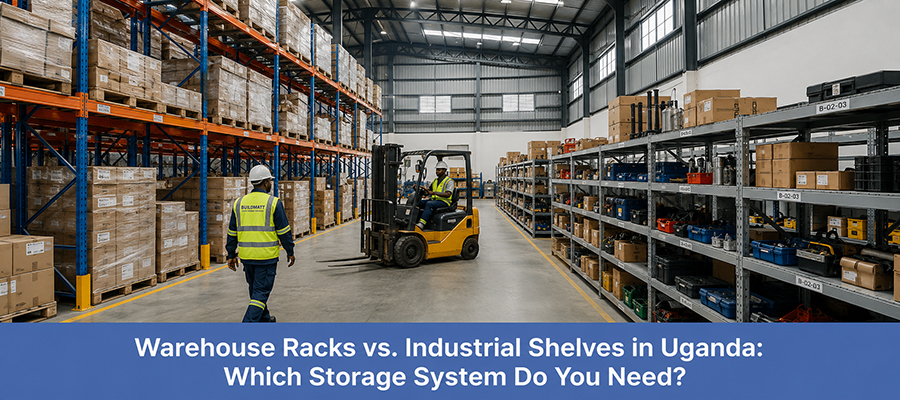
Different environments place different demands on a storage system, from humidity resistance in processing facilities to high density storage in distribution centers. These industrial shelving systems are designed around factors such as available floor space, inventory type and loading requirements. For warehouses handling heavier materials, heavy duty storage systems can be planned with suitable shelf configurations and support structures. These industrial storage solutions help businesses organize inventory while improving accessibility and space utilization.
Factors to Consider Before Ordering Steel Shelves
Before placing an order, it helps to review a few practical factors so the final storage system fits the facility correctly.
Consider the following before ordering:
- Expected storage load and weight distribution
- Available warehouse floor space and layout
- Required shelf dimensions and configuration
- The material environment, including humidity and temperature
- Possible future expansion of storage needs
Reviewing these points early reduces the chance of ordering a system that needs modification soon after installation. Build Matt discusses these factors with businesses to help match a steel shelf system to actual site conditions.
Selecting Steel Shelf Manufacturers, Suppliers, Builders and Contractors
Choosing among steel shelf manufacturers, metal shelving manufacturers, suppliers, builders and contractors involves more than comparing prices. Buyers benefit from reviewing how a manufacturer manages each stage described above, from material sourcing to installation support. Steel shelf builders and contractors who can explain their fabrication methods, welding standards and quality checks are generally better positioned to deliver a storage system that performs consistently. Businesses should also evaluate whether the proposed steel rack systems match their inventory handling methods and operational requirements.
About Build Matt: Steel Shelf Manufacturers, Suppliers, Builders and Contractors in Uganda
Build Matt provides industrial storage and warehouse solutions for businesses across Uganda that need reliable, practical and durable storage systems. The company focuses on steel shelf and warehouse storage solutions built with an engineering minded approach to fabrication and installation, working alongside purchasing teams to develop storage systems suited to their needs.
Conclusion: Working with Trusted Steel Shelf Manufacturers, Suppliers, Builders and Contractors
Producing a dependable steel shelf involves far more than assembling metal parts. From selecting the right steel grade through fabrication, welding, finishing, inspection and installation, each stage plays a role in how the shelf performs over its working life. Businesses planning warehouse upgrades can consult experienced steel shelf manufacturers and suppliers to select a system aligned with their storage requirements. Build Matt supports businesses across Uganda with practical, engineering focused shelving.
Frequently Asked Questions About Steel Shelf Manufacturers, Suppliers, Builders and Contractors
What factors determine the quality of a steel shelf?
Quality depends on the steel grade, fabrication accuracy, weld joint strength and the thoroughness of final inspection. Each stage affects how well a shelf performs under real warehouse conditions.
Why is steel selection important in shelf manufacturing?
The steel grade affects load capacity, durability and resistance to wear. Choosing an unsuitable grade can lead to early sagging or structural weakness. Build Matt helps businesses select steel suited to their storage application.
How are steel shelves fabricated?
Fabrication involves cutting, shaping and preparing steel components to precise measurements before assembly. Accuracy at this stage prevents alignment issues later.
How does welding affect steel shelf strength?
Welding joins components into a single structural unit, and joint strength determines how much load the shelf can safely carry. Poor welds create hidden weak points. Build Matt focuses on accurate welding as part of its fabrication process.
When should quality inspection be carried out?
Quality inspection should take place after fabrication and finishing, before the shelf is transported to site, so dimensional and structural issues can be identified early. Build Matt treats inspection as a standard step before any storage system leaves production.
Which industries commonly use steel storage racks?
Steel storage racks are widely used in warehouses, distribution centers, manufacturing facilities and cold storage environments, each needing different configurations based on load and space. Build Matt supports a range of storage requirements across these sectors.
Where should steel shelves be installed for best performance?
Steel shelves perform best when installed on properly prepared flooring with adequate space for loading and access. Site conditions should be assessed before installation begins. Build Matt considers site readiness as part of its installation planning process.
What should buyers look for in steel shelf manufacturers and suppliers?
Buyers should look for manufacturers, suppliers, builders and contractors who can explain their material selection, fabrication, welding and inspection practices clearly. This transparency indicates a structured manufacturing approach. Build Matt provides this level of process clarity to purchasing teams and industrial buyers.
How long does the steel shelf manufacturing process typically take?
Timelines vary with order size, design complexity and site readiness, so exact timelines should be confirmed with the manufacturer. Build Matt discusses realistic planning timelines with clients based on project scope.
Why is proper installation as important as manufacturing quality?
Even a well manufactured shelf can underperform if installed incorrectly, leading to instability or uneven load distribution. Correct placement and assembly protect the investment made in fabrication. Build Matt supports clients through this final stage to help the storage system function as intended.

Founder & CEO
Mukesh Patel is the Founder & CEO of Build Matt ltd, specializing in Pre-Engineered Buildings (PEB) and general steel fabrication. With advanced technology, modern machinery, and a skilled workforce, he delivers efficient and high-quality solutions across East and Central Africa, including Uganda, Kenya, Tanzania, Congo, South Sudan, Rwanda, and Burundi.