Build Matt Ltd.

  December 23, 2025
Share At:
Google AI ChatGPT Grok Perplexity

Listening Article

A home’s roof is more than just a shield against the elements; it is a complex system designed to regulate temperature and humidity. Central to this system are roof vents, which are critical for maintaining a home’s structural integrity and energy efficiency. Without proper ventilation, attics can become traps for extreme heat and moisture, leading to mold, rot, and high utility bills.

Why Is Roof Ventilation Important?

The primary goal of roof ventilation is to create a continuous, balanced airflow through the attic. This involves taking in fresh air from the outside and exhausting stale, hot air.

Temperature Regulation

In the summer, sunlight can heat an attic to over 150°F (65°C). Proper vents allow this heat to escape, reducing the load on your air conditioning system and lowering energy costs. In winter, ventilation keeps the attic cool to prevent ice dams, which occur when warm attic air melts snow on the roof that then refreezes at the colder eaves.

Moisture Control

Daily activities like showering, cooking, and doing laundry release significant moisture into the air. If this warm, moist air migrates into a poorly ventilated attic, it condenses on cold surfaces.

  • Mold and Mildew: Persistent dampness creates an environment where mold and mildew thrive, posing serious health risks.
  • Wood Rot: Excess moisture can cause roof decking and rafters to warp or rot, compromising the entire structure.
  • Rust: Metal components like nails, ducting straps, and plumbing can rust and fail due to condensation.

Types of Roof Vents: Active vs. Passive

Vents are broadly categorized based on how they move air.

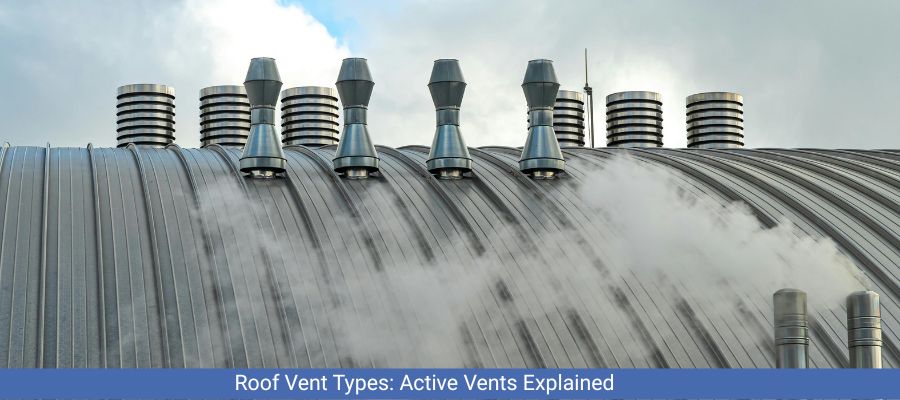
Active Vents

These rely on external power or natural wind dynamics to create suction.

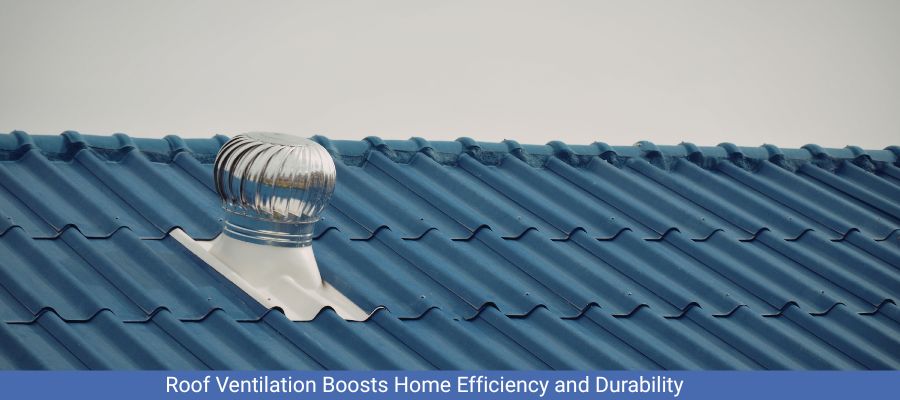
  • Turbine Vents (Whirlybirds): Use wind to spin internal blades that pull air out of the attic.
  • Power Vents: Electrically powered fans that often use a thermostat or humidistat to activate when attic conditions reach a certain level.
  • Solar-Powered Vents: Similar to power vents but utilize solar energy, making them eco-friendly but less effective on cloudy days.
  • Ridge Vents with Baffles: Run along the roof peak and use a baffle to create a channel for air to escape.

Passive Vents

These have no moving parts and rely on natural convection (the principle that heat rises) and wind.

  • Soffit Vents: Installed under the eaves, these serve as intake vents, bringing cool air into the attic.
  • Box Vents (Static Vents): Simple, roof-mounted openings that allow hot air to rise and exit.
  • Gable Vents: Located on the exterior walls at the gable ends to facilitate cross-ventilation.

How Many Roof Vents Do I Need?

Proper ventilation requires a balanced system of 50% intake and 50% exhaust.

The 1/150 and 1/300 Rules

Most building codes use a “Net Free Area” (NFA) calculation:

  • 1/150 Rule: One square foot of ventilation for every 150 square feet of attic floor space.
  • 1/300 Rule: One square foot of ventilation for every 300 square feet of attic floor space, often permitted if the system is perfectly balanced between intake and exhaust.

Calculation Example: For a 1,500 sq. ft. attic using the 1/300 rule, you need 5 square feet of total ventilation. This should be split into 2.5 sq. ft. of intake (soffit) vents and 2.5 sq. ft. of exhaust (ridge/box) vents.

Roof Vents Installation and Placement

Strategic placement is key to avoiding “dead air zones” where moisture accumulates.

  • Placement: Exhaust vents should be installed near the peak of the roof, while intake vents belong at the eaves.
  • Avoid Imbalance: Too many exhaust vents without enough intake can cause “short-circuiting,” where air is pulled from nearby exhaust vents rather than through the entire attic space.
  • Professional Installation: Roofers are generally the best professionals to install vents to ensure a watertight seal and prevent future leaks.

Troubleshooting: Can Roof Vents Cause Problems?

While essential, roof vents can become a source of trouble if damaged or poorly maintained.

Roof Vent Leaks

Leaking around vent pipes or flashing is a common issue, especially during heavy rain.

  • Signs: Yellow or brown water stains on the ceiling, dripping sounds in the attic, or musty odors.
  • Causes: Cracked “pipe boots” (the seal around a vent pipe), damaged flashing, or blocked vents due to debris like leaves.

Pests

Damaged or poorly screened vents can become entry points for squirrels, rodents, and insects. If you hear scratching noises or find excrement in the attic, your vents may need repair.

Conclusion: A Balanced Approach to Home Health

The science of roof ventilation is a fundamental pillar of responsible homeownership. As we have explored, a well-designed system—built on the principle of a balanced 50/50 ratio between intake and exhaust—is essential for regulating attic temperatures, controlling moisture, and extending the lifespan of your roofing materials.

By investing in the right type of vents—whether active solar-powered fans or passive ridge systems—homeowners can achieve significant energy savings while preventing costly structural damage like wood rot and ice dams. Ultimately, roof ventilation is not just about moving air; it is about creating a healthy, durable, and efficient environment for your home.