Read Our Article
Durability and Weather Resistance of Prefabricated Container HomesMetal Stairs and Railings for Industrial Facilities: Safety, Design and Installation Considerations
August 24, 2026
Share At:




Listening Article
AI Summary
Metal stairs and railings support safe access and movement in warehouses, factories and mezzanine areas across Uganda. Selection depends on usage, material, structural conditions and accessibility needs. This guide explains stair and railing design, Steel Railings, stainless steel railings for stairs, customization, durability and mezzanine integration. It also covers installation and safety considerations for industrial facilities. Build Matt supports Ugandan businesses with practical metal stairs and railings, staircase railing systems and industrial access solutions matched to facility requirements.
Metal Stairs and Railings for Industrial Facilities in Uganda
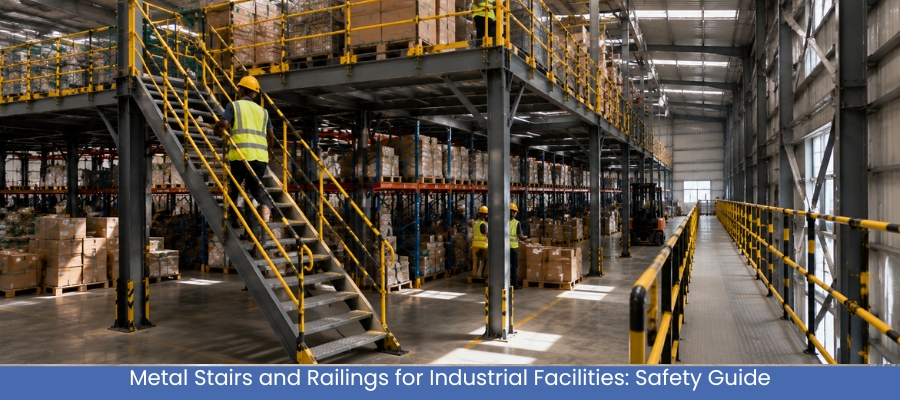
Industrial facilities in Uganda rely on well planned stairs and railings to move people safely between floor levels, platforms and mezzanine areas. Whether the need is a warehouse stair, an industrial staircase or a full staircase railing system, the design has to match how the space is used.
Businesses searching for industrial stairs Uganda, metal staircase Uganda or steel railings Uganda are usually trying to solve a practical access problem, not simply add a fixture.
Want to Discuss?
 Call Us Now!
Understanding Metal Stairs and Railings for Industrial Facilities
Metal stairs and railings are structural access systems used to connect different levels within a facility, including mezzanine floors, raised platforms, loading areas and rooftop access points. In industrial settings, these systems need to withstand frequent foot traffic, equipment movement nearby and varying environmental conditions.
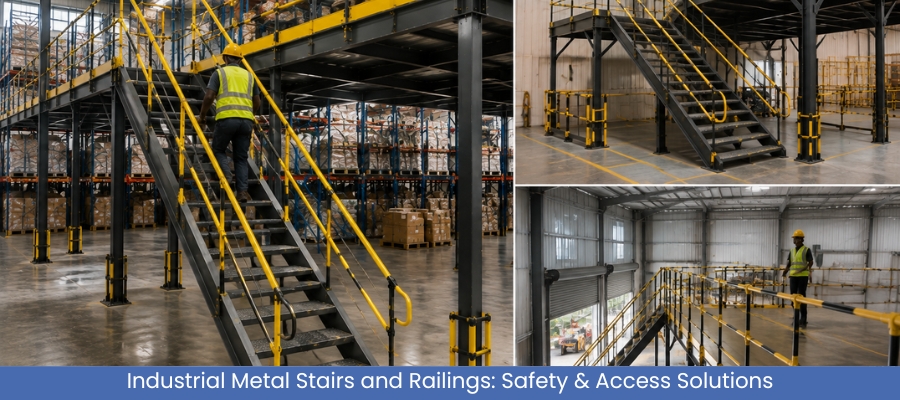
Industrial stair railings typically include:
- Stair stringers and treads that carry the structural load
- Handrails and guardrails that prevent falls from open edges
- Toe boards or kick plates where equipment or materials are present
- Landings that allow safe direction changes on longer stair runs
The right combination of these elements depends on the facility layout, the number of people using the stairs, the frequency of use and any regulatory or engineering requirements that apply to the site. Build Matt works with businesses to review these factors before recommending a metal stairs and railings configuration, so that the resulting system matches actual site conditions rather than a generic layout.
Stair and Railing Design Requirements for Industrial Facilities
What determines a suitable stair railing design? A suitable design depends on the facility layout, stair dimensions, access requirements, intended use, material selection, structural conditions and applicable project requirements. There is no single design that fits every industrial building.
Key design considerations include:
- Stair width and rise to tread ratio for comfortable and safe movement
- Handrail height and spacing suited to the type of user and traffic
- Load bearing capacity required for personnel and, where relevant, equipment
- Slip resistance of stair treads, particularly in areas exposed to moisture, oil or dust
- Clearances around the stair for doors, machinery or storage racking
Recognized engineering and safety guidance from bodies such as the Occupational Safety and Health Administration and international structural standards organizations provide general reference points for stair and railing dimensions, though specific project requirements should always be confirmed with a qualified engineer for the facility in question.
Build Matt supports businesses with practical stair railing designs developed around the actual layout of the facility, including available floor space, ceiling height and how the stairs will connect to platforms or mezzanine structures.
Material Selection for Metal Stairs and Railings
Material choice affects strength, appearance, maintenance and corrosion resistance. The three most common materials for industrial stairs and railings are mild steel, galvanized steel and stainless steel.
Mild steel is widely used for structural stair frames because it offers good strength at a reasonable cost, though it typically requires a protective coating or paint finish to resist corrosion. Galvanized steel adds a zinc coating that improves resistance to rust, making it a common choice for outdoor stairs, walkways and platforms exposed to weather.
Stainless steel railings for stairs are often selected where appearance, hygiene, corrosion resistance or reduced maintenance are priorities. Stainless stairs railing systems are common in facilities such as food processing plants, pharmaceutical sites, showrooms and office reception areas connected to industrial buildings, where an ss railing staircase presents a cleaner finish alongside functional durability.
Build Matt helps businesses evaluate suitable Steel Railings, stainless steel railings for stairs and other metal railing options based on the environment, budget and appearance requirements of each project, rather than defaulting to one material for every application.
Build Matt helps businesses interpret this comparison against their own warehouse conditions rather than applying a generic answer, since the correct choice depends on the specific building, intended use and available space involved.
Our Other Product
Cold Storage & Agricultural Storage BuildingsSteel Railings and Steel Railings for Staircase Applications
Steel Railings and steel railings for staircase applications provide practical access protection for industrial stairs, platforms, mezzanine floors, walkways and other elevated areas, with the specific design and specification depending on engineering requirements for that location.
Common railing configurations include:
- Top rail and mid rail systems for open stair edges and platforms
- Vertical baluster designs for stairs with higher visibility requirements
- Mesh or panel infill railings where additional containment is needed
- Wall mounted handrails for enclosed stairwells
Balcony railing and general guard systems around elevated walkways follow similar principles, since the primary purpose in every case is to prevent falls while allowing safe, unobstructed movement. Build Matt manufactures Steel Railings configured to the intended location, whether that is an internal industrial staircase, an external metal staircase or a balcony railing connected to an office or mezzanine area.
Industrial and Commercial Environments
Metal stairs and railings are used across a wide range of settings in Uganda, including warehouses, manufacturing plants, distribution centers, agricultural processing facilities and commercial buildings with elevated storage or office areas.
Warehouse stairs and railings often connect ground floor operations to mezzanine storage or picking areas, supporting more efficient use of vertical space. Industrial access stairs at manufacturing sites may need to accommodate personnel moving between production lines, control rooms or maintenance platforms.
Because each environment presents different traffic patterns, exposure conditions and space constraints, Build Matt reviews the specific operational setting of a facility before proposing a metal staircase or railing configuration, so the system supports how the space is actually used day to day.
We are Available on Chat, Call, Email!
Email!
Configuration and Customization Possibilities
Industrial facilities rarely share identical floor plans, so stairs and railings frequently need to be configured for the specific space available. Common customization options include straight run stairs, L shaped stairs, U shaped stairs and spiral stairs, selected according to available floor area and headroom.
Railings can also be customized in terms of height, spacing, finish and infill style, allowing a business to align the stairs and railings with both functional requirements and the overall appearance of the facility.
Build Matt develops practical stair railing designs suited to different industrial facility layouts, working from the available space and access requirements at each site rather than a fixed catalog design, so the resulting metal stairs and railings fit the building instead of requiring the building to be adapted to the stairs.
Durability and Long Term Use
Industrial stairs and railings are subjected to continuous use, so durability is a central consideration. Factors that influence long term performance include the quality of the base material, the welding and fabrication standard, the protective coating applied and the level of maintenance carried out over time.
Galvanized and stainless steel options generally require less frequent maintenance in humid or exposed conditions compared with untreated mild steel, though actual maintenance needs depend on the specific environment, usage levels and coating applied. Regular inspection for loose fixings, worn treads or corrosion helps extend the working life of any metal stair or railing system.
Build Matt fabricates metal stairs and railings using structural steel components suited to industrial use, and advises businesses on maintenance practices appropriate to their facility environment so that the system continues performing reliably over time.
Accessibility and Safe Movement
How do metal stairs and railings support accessibility in industrial facilities? They provide a defined, protected path for personnel to move between floor levels, reducing the risk of falls and supporting orderly movement in areas with regular foot traffic.
Accessibility considerations include:
- Adequate stair width for two way movement where required
- Non slip tread surfaces suited to the facility environment
- Clear signage and lighting along stair routes
- Handrails positioned to support users of different heights and needs
Where a facility has specific accessibility requirements, these should be reviewed against applicable local building regulations and, where relevant, recognized accessibility standards. Build Matt factors accessibility and safe movement into stair and railing configurations, aiming for practical, everyday usability rather than a design that only meets minimum requirements on paper.
Choosing the Right Metal Stairs and Railings Configuration
The comparison below outlines general characteristics of common stair and railing options for industrial and commercial use. Actual suitability should always be confirmed against the specific site, engineering requirements and applicable regulations.
| Option | Typical Usage | Material | Durability | Customization | Accessibility | Installation Considerations |
|---|---|---|---|---|---|---|
| Mild steel stairs and railings | General warehouse and factory access | Mild steel with protective coating | Good durability with regular maintenance | Moderate to high customization options | Standard treads and handrail arrangements | Requires painted or coated finishing for protection |
| Galvanized steel stairs and railings | Outdoor platforms, walkways and loading areas | Galvanized steel | High durability in exposed environments | Moderate to high customization options | Suitable for weather exposed access routes | Galvanized coating helps reduce future maintenance needs |
| Stainless steel railings for stairs | Food, pharmaceutical, showroom and office applications | Stainless steel | High durability with low maintenance requirements | High customization with finish focused designs | Provides smooth and hygienic surfaces | Requires precise fabrication with higher material cost |
| Mezzanine access stairs | Connecting ground floor areas with mezzanine storage levels | Steel, selected according to load requirements | Good durability for continuous industrial use | Highly customizable based on layout requirements | Designed according to traffic volume and access needs | Requires structural load assessment and proper planning |
Our Other Product
Steel Platforms & WalkwaysInstallation and Maintenance Considerations
Installation timelines and requirements vary according to project size, stair and railing type, customization requirements, facility accessibility and site conditions, so a single fixed timeline cannot be applied to every project. A small internal staircase installation differs considerably from a full mezzanine access system spanning multiple platforms.
Practical installation considerations include:
- Site measurements and structural assessment before fabrication
- Coordination with existing building elements such as flooring, walls and mezzanine structures
- Safe sequencing of installation to avoid disrupting ongoing operations
- Final inspection of welds, fixings and railing stability before handover
Ongoing maintenance, such as checking for corrosion, loose fittings or worn treads, helps keep the system safe and functional over its working life. Build Matt supplies and supports properly planned metal stairs and railings installations, coordinating fabrication and site work so that industrial stairs Uganda projects are completed with attention to both structural integrity and minimal disruption to daily operations.
Want to Discuss?
Call Us Now!
Integration with Mezzanine Floors, Platforms and Elevated Areas
Mezzanine stairs and railings need to be planned alongside the mezzanine structure itself, since stair placement affects both floor space usage and the efficiency of movement between levels. Poorly positioned stairs can create bottlenecks near storage racking, workstations or loading points.
When integrating stairs and railings with mezzanine floors or elevated platforms, businesses generally need to consider the load bearing capacity of the mezzanine, the required number of access points, emergency egress requirements and how the stairs connect visually and structurally with the platform edge railing.
Build Matt supports businesses with complete industrial solutions that include metal stairs and railings, Steel Railings, staircase railing systems and mezzanine access structures planned together, so the stairs, railings and platform function as one coordinated system rather than separate additions.
Selecting the Right Metal Stairs and Railings Solution
Which factors matter most when selecting metal stairs and railings? The correct selection depends on intended application, available space, stair configuration, access requirements, facility layout, material requirements, workflow and installation conditions, considered together rather than in isolation.
A practical selection process typically involves:
- Reviewing how the space is currently used and how stairs will affect that workflow
- Confirming structural and load requirements for the intended location
- Choosing a material, such as mild steel, galvanized steel or stainless steel, suited to the environment
- Deciding on railing configuration based on safety requirements and traffic levels
- Planning installation around ongoing facility operations
Build Matt helps businesses work through this process, identifying suitable stair and railing systems based on facility layout, access requirements, usage patterns and operational needs, so the final metal stairs and railings solution fits both the physical space and the way the business actually operates.
Read Our Article
How to Customize Industrial Sheds for Your Business NeedsChoosing Reliable Metal Stairs and Railings in Uganda
Metal stairs and railings play a practical role in how safely and efficiently people move through industrial and commercial facilities. Selecting the right system involves reviewing usage patterns, material requirements, structural conditions, accessibility needs and how the stairs and railings will integrate with mezzanine floors or elevated platforms.
Businesses in Uganda evaluating metal stairs and railings, Steel Railings or stainless steel railings for stairs benefit from working with a provider that reviews the specific requirements of their facility rather than applying a standard design to every project. Build Matt supports businesses with industrial stairs, staircase railing systems and related access solutions planned around actual site conditions and operational needs.
FAQs on Metal Stairs and Railings, Steel Railings and Staircase Railing Systems
Metal stairs and railings provide safe access between floor levels, mezzanine areas, platforms and walkways in warehouses, factories and commercial buildings. They support regular foot traffic while helping prevent falls from open edges. Build Matt supplies metal stairs and railings configured for specific facility layouts and access requirements across Uganda.
The right design depends on facility layout, stair dimensions, access requirements, intended use and material selection. There is no single design suited to every site. Build Matt reviews these factors with businesses to develop practical stair railing designs matched to available space and operational needs.
Mild steel, galvanized steel and stainless steel are commonly used, each suited to different conditions. Galvanized steel performs well in exposed or outdoor areas, while stainless steel railings for stairs suit environments where appearance and low maintenance matter. Build Matt helps businesses evaluate suitable Steel Railings based on their specific environment.
Stainless steel railings for stairs are generally considered where corrosion resistance, hygiene or appearance are priorities, such as food processing, pharmaceutical or office reception areas. An ss railing staircase also requires less frequent maintenance in humid conditions. Build Matt advises businesses on when stainless stairs railing options are appropriate for their facility.
Space requirements depend on stair type, rise, run and applicable clearance requirements around the stairs. Straight, L shaped, U shaped and spiral configurations each use floor space differently. Build Matt assesses available space on site before recommending a suitable metal staircase configuration for a facility.
Mezzanine stairs and railings are installed at points connecting ground floor operations to raised storage or working areas, positioned to avoid disrupting racking, workstations or loading zones. Build Matt plans mezzanine stairs and railings alongside the mezzanine structure itself for coordinated access.
Installation timelines vary according to project size, stair and railing type, customization requirements and site conditions, so there is no fixed duration that applies to every project. Build Matt provides project specific timelines after reviewing site details and confirms these directly with the business before installation begins.
Businesses in Uganda needing industrial stairs, railings or mezzanine access systems can work with a supplier experienced in industrial fabrication and installation. Build Matt provides metal stairs and railings, Steel Railings and staircase railing systems for warehouses, factories and commercial facilities across the country.
Maintenance needs depend on material, coating and environmental exposure, and generally include periodic checks for corrosion, loose fixings and worn treads. Galvanized and stainless steel options typically need less frequent attention than untreated mild steel. Build Matt advises businesses on maintenance practices suited to their specific stair and railing system.
Yes, balcony railing and staircase railing systems can be customized in height, spacing, infill style and finish to suit different buildings and usage requirements. Build Matt develops railing configurations based on the intended location, whether an internal staircase, external stair or balcony area connected to an industrial or commercial facility.

Founder & CEO
Mukesh Patel is the Founder & CEO of Build Matt ltd, specializing in Pre-Engineered Buildings (PEB) and general steel fabrication. With advanced technology, modern machinery, and a skilled workforce, he delivers efficient and high-quality solutions across East and Central Africa, including Uganda, Kenya, Tanzania, Congo, South Sudan, Rwanda, and Burundi.
Recent Blogs
- Metal Stairs and Railings for Industrial Facilities: Safety, Design and Installation Considerations
- Free Standing Mezzanines vs Building Supported Mezzanines: Which Solution Is Right for Your Warehouse?
- Steel Industrial Rack vs Commercial Rack: Understanding the Key Differences for Businesses
- How to Design a Car Parking Structure for Multiple Vehicles and Maximum Space Efficiency
- How to Choose the Right Shade Structure for Balconies, Windows and Outdoor Spaces