

Read Our Article
What Types of Steel Trusses and Rafters are fabricated for Industrial and Commercial Projects?Interior Design Ideas for Steel Container Homes in Uganda: Making Small Spaces Feel Big
May 19, 2026
Share At:




Listening Article
AI Summary
Container homes are one of Uganda’s fastest-growing housing solutions — compact, affordable, rapidly deployable, and increasingly stylish. But a 20-foot container provides just 14.8 square metres of floor space, and even a 40-foot unit offers only 28.3 square metres. Maximising comfort, functionality, and visual spaciousness within these dimensions requires smart interior design. This article by Build Matt Ltd. — Uganda’s leading container home manufacturer and supplier — presents practical interior design ideas tailored to Uganda’s climate, lifestyle, and material availability. From open-plan layouts and loft sleeping platforms to louvred shutters, polycarbonate roof lights, and locally crafted furniture, this guide helps container home owners in Kampala and across Uganda create living spaces that feel far larger and more comfortable than their square-metre footprint suggests.
Understanding the Container Home Space: Working with What You Have
Before exploring design strategies, it is important to understand the physical dimensions and characteristics of the two standard container sizes that Build Matt converts into homes:
- 20-foot container: 5.9 m long × 2.35 m wide × 2.39 m internal height. Total floor area: approximately 13.9 square metres. This is roughly the size of a large bedroom.
- 40-foot container: 12.0 m long × 2.35 m wide × 2.39 m internal height. Total floor area: approximately 28.2 square metres. This is roughly the size of a studio apartment.
- 40-foot high-cube container: 12.0 m long × 2.35 m wide × 2.69 m internal height. The extra 300 mm of internal height creates significantly more feeling of spaciousness and is Build Matt’s recommended choice for all container home projects where budget allows.
The single most impactful characteristic of container homes is their narrow width — 2.35 metres. This width limits the size of furniture and the depth of rooms in a conventional layout. Every effective container home interior design strategy works with this constraint rather than against it.
Want to Discuss?
 Call Us Now!
Design Strategy 1: Open-Plan Living — Remove Internal Walls
The most powerful single decision in container home interior design is to resist the temptation to divide the space into separate enclosed rooms. In a 40-foot container, a traditional layout with separate bedroom, living room, kitchen, and bathroom — each separated by internal walls — creates a series of extremely cramped, dark cells that feel claustrophobic.
Build Matt’s most successful container home designs use an open-plan layout in which:
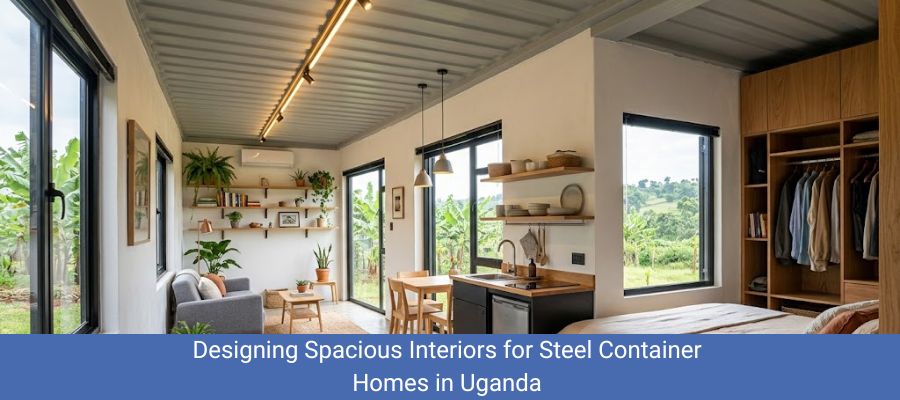
- The kitchen, dining, and living area occupy one end of the container as a single open space. A kitchen counter running along one wall serves as a partition that suggests separation without enclosing either space.
- The sleeping area occupies the other end of the container, separated from the living area by a curtain track, a bookcase used as a room divider, or sliding barn door panels on an overhead track — all of which can be opened completely to make the space feel large.
- The bathroom is the only fully enclosed room, built as a compact wet room (shower, WC, and hand basin in approximately 2.0 × 1.8 m) across the full width of the container at one end.
This open-plan approach makes a 40-foot container feel significantly larger than its footprint. When curtains and sliding doors are open, the full 12-metre length of the container is visible — a dramatically longer space than any individual enclosed room in the divided-room alternative.
Design Strategy 2: The Loft Platform — Double Your Usable Space
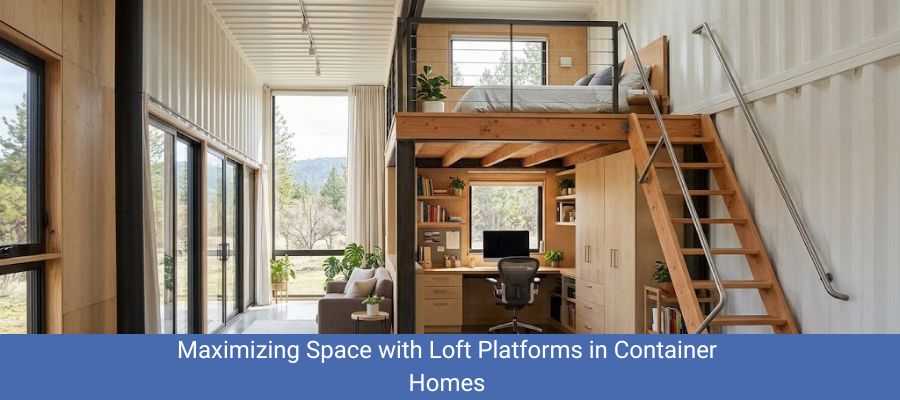
The 40-foot high-cube container’s 2.69-metre internal height is just sufficient to create a loft sleeping platform above one section of the living area — effectively doubling the usable floor space of that zone. Build Matt fabricates loft platforms from lightweight steel angle or hollow section frames with timber deck boards or plywood flooring:
- The loft platform occupies the full 2.35-metre width of the container over approximately 3.0–3.5 metres of its length at one end, creating a low-profile sleeping area with approximately 1.3–1.4 metres of headroom above the mattress.
- Below the loft platform, the 1.2–1.3-metre height under-loft space is used for storage wardrobes, a desk workspace, or as a compact home office nook.
- Access to the loft is via a compact ship’s stair (alternating tread stair) built flush against the container end wall — taking up far less floor space than a conventional stair.
The loft sleeping platform is particularly popular with Build Matt’s younger clients and home-based workers who want a separate sleeping space in a single-container home without the cost of a second container.
Side Window Openings
Build Matt’s CNC plasma cutting equipment can cut window openings of any size and shape in the steel side walls of the container. For container homes, Build Matt typically installs:
- Full-height louvred windows (2.0 m high × 0.8–1.0 m wide) on each long side — providing cross-ventilation and flooding the interior with natural light on both sides simultaneously.
- Fixed glazed windows for views with smaller louvred sections for ventilation — common in living areas facing attractive garden or landscape views.
- Pivot windows or casement windows in bedrooms and bathrooms for ventilation and light control.
Roof Lights (Skylights)
For container homes where the side walls face a fence, a neighbouring building, or other obstructions that limit side window effectiveness, Build Matt cuts openings in the roof and installs polycarbonate skylight panels — typically twin-wall or multi-wall polycarbonate — that flood the interior with diffuse overhead natural light without the direct heat gain of south-facing glass. In Uganda’s sunny climate, tinted bronze or opal polycarbonate is recommended to reduce heat gain while maintaining good light transmission.
Glass End Walls
The most dramatic natural light strategy is to replace the entire end wall of the container with a glass or aluminium-and-glass curtain wall. Build Matt works with aluminium glazing specialists to install sliding glass doors and fixed glazed panels that open the full end of the container to an outdoor deck or garden space — dissolving the boundary between interior and exterior and making even a small container feel continuous with the outdoors.
Our Other Product
Heavy Steel Structures (Bridges, Towers, Girders)Design Strategy 4: Colour and Surface Finishes That Expand Space
Interior colour and finish choices have a powerful effect on how large a space feels:
- Light, neutral wall colours — off-white, warm cream, pale grey, or light sage green — reflect light around the space and make walls feel further away. Build Matt finishes container home interiors in smoothed plaster skim or plywood panelling painted in light neutrals as the recommended standard.
- Light-coloured flooring — light timber laminate, light grey ceramic tile, or polished concrete screed — extends the sense of openness across the floor plane. Dark flooring, while fashionable, makes narrow spaces feel heavier.
- Mirror panels used strategically on one end wall of a short container effectively double the apparent length of the space — an old interior designer’s trick that is particularly effective in container homes.
- Avoiding busy pattern and heavy texture on walls and floors in small container spaces — keeping surfaces calm and consistent allows the space itself to breathe.
Design Strategy 5: Built-In Storage — Furniture That Disappears
One of the most common mistakes in small container home interiors is the use of free-standing furniture — wardrobes, dressers, bookshelves — that occupy precious floor space and visually fragment the room. Build Matt recommends built-in storage solutions that are integrated into the container structure:
- Full-height built-in wardrobes spanning the full width of the container at the bedroom end, with sliding mirror doors that also provide light reflection.
- Under-bed storage: Platform beds with lift-up or drawer storage underneath, fabricated by local Ugandan carpenters to Build Matt’s dimension specifications, maximise storage without adding a separate furniture item.
- Kitchen storage running the full length of one container wall from floor to ceiling, with upper cabinets and lower cabinets connected by a continuous countertop — making the kitchen functional, organised, and visually clean.
- Built-in benches with storage under the seat in the living area — providing seating, storage, and a design feature in one element.
We are Responsive
Contact Us!
Insulation and Thermal Comfort: Essential for Uganda's Climate
A container home without proper insulation in Uganda’s climate is uninhabitable during the day — the steel walls and roof become extremely hot under direct sun, creating an oven-like interior. Build Matt’s container homes use closed-cell spray polyurethane foam insulation applied to all internal steel surfaces — walls, ceiling, and floor — before the internal lining is installed. This insulation:
- Reduces internal temperature by 8–12°C compared to an uninsulated container in Uganda’s midday sun.
- Eliminates condensation on cold steel surfaces during Uganda’s cool nights.
- Provides acoustic insulation, reducing noise from rain on the steel roof.
- Acts as a vapour barrier, protecting the insulation and internal lining from moisture.
Frequently Asked Questions (FAQs)
A well-designed 40-foot container home with an open-plan living area, a loft sleeping platform, and a compact bathroom can comfortably accommodate one or two adults. For a family of four, Build Matt recommends a two-container configuration (two 40-foot containers side by side or end to end) that provides a combined floor area of approximately 56 square metres — sufficient for a comfortable family home.
With Build Matt's closed-cell spray foam insulation and a well-designed ventilation system (louvred windows, roof ventilators, and split-unit air conditioning), a container home is thermally comfortable even in Kampala's warm climate. Many Build Matt clients report that properly insulated container homes with good cross-ventilation are actually cooler and more comfortable than uninsulated brick houses.
Yes. Adding a covered veranda or timber deck to one or both ends of a container home dramatically extends the usable living space and connects the interior to the outdoor garden environment. Build Matt fabricates steel-framed verandas and can advise on timber deck construction as part of the container home project scope.
A container home that serves as a permanent residence in Uganda requires a building permit from KCCA (in Kampala) or the relevant district local government. Build Matt guides container home clients through the permit application process and provides all required architectural and structural drawings. The permit process for container homes is generally the same as for conventional residential construction.
Build Matt's project team works with clients on space planning and can advise on built-in storage and furniture layouts that maximise the usable space in a container home. For detailed interior furniture design and custom furniture fabrication, Build Matt can recommend trusted partner carpenters and interior designers in Kampala who have experience working in container home spaces.
A properly constructed and maintained container home from Build Matt — with closed-cell spray insulation, sealed penetrations, zinc-rich primer, and polyurethane topcoat on all external steel surfaces — is designed for a structural service life of 25 to 40 years. Regular annual maintenance (inspection of all sealants, surface coatings, and guttering) will maximise the home's service life.

Founder & CEO
Mukesh Patel is the Founder & CEO of Build Matt ltd, specializing in Pre-Engineered Buildings (PEB) and general steel fabrication. With advanced technology, modern machinery, and a skilled workforce, he delivers efficient and high-quality solutions across East and Central Africa, including Uganda, Kenya, Tanzania, Congo, South Sudan, Rwanda, and Burundi.
Recent Blogs
- Metal Stairs and Railings for Industrial Facilities: Safety, Design and Installation Considerations
- Free Standing Mezzanines vs Building Supported Mezzanines: Which Solution Is Right for Your Warehouse?
- Steel Industrial Rack vs Commercial Rack: Understanding the Key Differences for Businesses
- How to Design a Car Parking Structure for Multiple Vehicles and Maximum Space Efficiency
- How to Choose the Right Shade Structure for Balconies, Windows and Outdoor Spaces