Build Matt Ltd.

  May 4, 2026
Share At:
Google AI ChatGPT Grok Perplexity

Listening Article

Introduction: Why Cable Tray Installation Matters in Ugandan Warehouses

Uganda’s industrial sector is undergoing rapid expansion. Cities like Kampala, Jinja, Entebbe, and Mbarara are witnessing a surge in warehouse construction, agro-processing facilities, and manufacturing plants. With this growth comes an urgent need for safe, reliable, and compliant electrical infrastructure—and at the heart of that infrastructure is the cable management tray, commonly known as a cable tray or cable trunk.

Poor cable tray installation in industrial warehouses leads to overheating cables, electrical fires, costly downtime, and safety hazards for workers. Build Matt Ltd., Uganda’s leading steel fabrication company, has spent over two decades installing electrical cable trays across warehouses, fuel stations, pharmaceutical plants, and cold storage facilities in Uganda and across East Africa. This guide draws on that experience to give contractors, engineers, and warehouse managers a reliable, step-by-step cable tray installation reference.

Need More Information?
Email Us Today!

Step 1: Assess the Site Conditions Before Installation

Every cable tray installation project in Uganda must begin with a thorough site assessment. Ugandan industrial environments present unique challenges that differ from those in temperate climates:

  • Humidity and moisture: Warehouses near Lake Victoria or in low-lying areas of Kampala can experience relative humidity exceeding 80%. This accelerates corrosion in untreated mild steel cable trays.
  • Dust and particulates: Agro-processing plants and grain storage facilities in areas such as Namanve Industrial Park generate significant airborne dust, which can settle in open cable trays and clog ventilation.
  • Temperature fluctuations: Uganda’s equatorial climate results in consistent high temperatures, particularly in warehouse roofs, which can increase cable operating temperatures and reduce cable lifespan if the tray system is not properly ventilated.
  • Load requirements: Heavy industrial cables such as power cables and armoured cables require ladder cable trays or heavy-duty steel cable trays with sufficient load-bearing capacity.

At this stage, conduct a full cable inventory: list all cables to be installed, their diameters, weights per metre, and voltage classes. This information determines tray sizing, fill ratios, and support spacing.

Step 2: Choose the Right Cable Tray Type for Your Warehouse

Build Matt Ltd. manufactures and supplies a comprehensive range of steel cable trays, each suited to different industrial applications:

  • Ladder Cable Tray: The best choice for heavy-duty industrial cable management in Ugandan warehouses. The open ladder design allows maximum airflow around cables, reducing heat build-up. Ideal for power cables, armoured cables, and long spans across warehouse roofs.
  • Perforated Cable Tray: Provides structural support with ventilation holes across the base. Suitable for medium-duty applications and works well in food processing or pharmaceutical warehouses where partial enclosure is required.
  • Wire Mesh Cable Tray (Basket Tray): Lightweight and easy to cut and modify on-site. Excellent for data and communication cables in IT rooms, control rooms, and server areas within industrial warehouses.
  • Galvanized Steel Cable Tray: Build Matt’s galvanized steel cable trays are treated with a zinc coating that provides exceptional corrosion resistance. These are the preferred choice for Uganda’s humid industrial environments, offering a service life of 20 to 30 years with minimal maintenance.
  • Flexible Cable Tray: Used for routing cables around machinery, bends, and obstacles. Works well in production floors where cable routing changes frequently.

For most Ugandan industrial warehouses, galvanized cable trays combined with ladder-style construction provide the optimal balance of strength, corrosion resistance, and ventilation.

Step 3: Calculate Tray Size and Fill Ratio

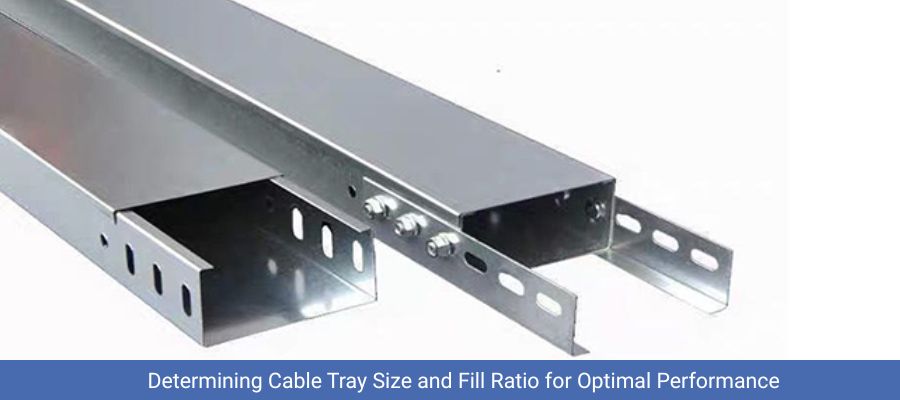
Proper cable tray sizing is critical for safety and code compliance. The International Electrotechnical Commission (IEC) and Uganda’s own building regulations recommend that cables should not fill more than 40% of the cable tray’s cross-sectional area to allow for heat dissipation and future cable additions.

Cable tray sizing formula:

  • List all cables and calculate each cable’s cross-sectional area (π × r²).
  • Sum all cross-sectional areas to get the total cable fill area.
  • Divide total fill area by 0.40 (40% fill ratio) to obtain the minimum tray cross-section needed.
  • Add a 20–30% spare capacity margin to allow for future cables.

Build Matt Ltd. provides standard cable tray widths of 100 mm, 150 mm, 200 mm, 300 mm, 450 mm, and 600 mm to suit a range of industrial cable management requirements. Custom cable tray widths are also available for specialised Ugandan industrial projects.

Step 4: Plan the Cable Tray Route and Support Spacing

Once the tray type and size are confirmed, plan the route through the warehouse. Key principles for cable tray routing in Ugandan industrial facilities include:

  • Keep cable trays away from heat sources such as furnaces, steam pipes, and direct sunlight to protect cable insulation.
  • Maintain a minimum clearance of 300 mm above electrical panel boards and switchgear for maintenance access.
  • Use cable tray elbows, tees, bends, and crosses at junction points to ensure smooth cable routing without sharp bends that can damage cable insulation.
  • For warehouse cable tray systems spanning more than 1,800 mm between supports, upgrade to ladder cable trays with higher load ratings or add intermediate supports.

Support spacing for steel cable trays in Uganda:

  • Light-duty wire mesh trays: support every 1,000–1,200 mm
  • Perforated steel cable trays: support every 1,200–1,500 mm
  • Heavy-duty ladder cable trays: support every 1,500–1,800 mm

Build Matt fabricates custom cable tray support brackets, wall-mounted brackets, ceiling hangers, and floor-standing support structures to suit any warehouse configuration.

Step 5: Install Cable Trays and Accessories

Begin cable tray installation from the main distribution board and work outward. Key installation steps:

  • Mark the tray route on walls and ceiling using chalk lines or laser levels to ensure straight, level installation.
  • Install support brackets or hangers at the calculated spacing, ensuring they are level with a spirit level or laser.
  • Mount cable tray sections, connecting them with manufacturer-supplied splice plates and bolts. Build Matt supplies matching cable tray accessories including elbows, tees, cable tray bends, and end caps.
  • Ensure all joints overlap by at least 50 mm and are bolted securely to maintain electrical continuity and mechanical strength.
  • Install cable tray covers where required for protection from dust, dripping water, or physical damage in active warehouse areas.
  • Ground (earth) the entire cable tray system using earthing straps at regular intervals. For galvanized cable trays, ensure electrical continuity across each joint.

Step 6: Cable Laying, Securing, and Labelling

Once the steel cable tray structure is installed, cable laying begins:

  • Separate power cables from data and communication cables using a divider or by routing them in separate parallel trays to avoid electromagnetic interference.
  • Lay cables in neat, parallel runs. Avoid crossing cables over each other where possible.
  • Secure cables to the tray using cable ties, cable cleats, or clamps at intervals specified by the cable manufacturer—typically every 500–750 mm for horizontal runs and every 300–450 mm for vertical runs.
  • Label every cable at each end and at tray entry and exit points. In Uganda’s industrial environments, UV-resistant, heat-resistant cable labels are recommended for long-term legibility.
Want to Discuss?
WhatsApp Call Us Now!

Step 7: Final Inspection and Testing

Before commissioning, carry out a final inspection of the complete cable tray installation:

  • Verify tray fill ratios do not exceed 40% of the tray cross-section.
  • Confirm all support brackets are secure and tray sections are properly connected.
  • Test the continuity of the earthing system across the entire cable tray network.
  • Inspect all cables for damage to insulation caused during installation.
  • Document the completed installation with photographs and as-built drawings for future maintenance reference.

Why Choose Build Matt Ltd. for Cable Tray Installation in Uganda?

Build Matt Ltd. is Uganda’s leading manufacturer and installer of steel cable trays, galvanized cable trays, wire mesh cable trays, and complete industrial cable management systems. Based in Kampala’s industrial area, Build Matt serves clients across Uganda, South Sudan, Rwanda, Kenya, Burundi, and the Democratic Republic of Congo. Our in-house manufacturing capability means faster delivery, custom tray dimensions, and lower costs compared to imported cable tray systems. Contact Build Matt today for a free site assessment and quotation for your Ugandan industrial warehouse project.

Frequently Asked Questions (FAQs)

Galvanized steel ladder cable trays are the best choice for most Ugandan industrial warehouses due to their corrosion resistance, high load-bearing capacity, and excellent cable ventilation. Build Matt Ltd. manufactures hot-dip galvanized steel cable trays that are ideal for Uganda's humid tropical environment.

The recommended maximum fill ratio is 40% of the cable tray's internal cross-sectional area. This allows sufficient space for heat dissipation and future cable additions. Build Matt's cable tray sizing guide helps engineers calculate the correct tray dimensions for their specific cable inventory.

Support spacing depends on the cable tray type and load. Ladder cable trays can typically be supported every 1,500 to 1,800 mm. Perforated trays should be supported every 1,200 to 1,500 mm. Wire mesh basket trays require supports every 1,000 to 1,200 mm. Build Matt provides custom support brackets for all spacing requirements.

Cable tray covers are recommended in areas with heavy dust, dripping water, chemical exposure, or physical impact risks. In general warehouse areas away from these hazards, open cable trays with good ventilation are preferred to maintain cable operating temperatures within safe limits.

Yes. Build Matt manufactures a full range of cable tray accessories including cable tray elbows, tees, bends, crosses, splice plates, end caps, and support brackets. We also supply custom cable tray components fabricated to your project specifications.

A cable tray is an open or semi-open support structure for cables, available in ladder, perforated, and mesh styles. A cable trunk (also called a cable duct or cable trunking) is a fully enclosed rectangular channel with a removable lid. Cable trunks offer greater physical protection and are used where cables are exposed to damage or where a neater appearance is required.