Build Matt Ltd.

  February 11, 2026
Share At:
Google AI ChatGPT Grok Perplexity

Listening Article

Architectural Integrity and Safety: The Evolution of Elevated Access

The integration of robust infrastructure in modern construction necessitates a focus on both durability and worker safety. When we examine the role of specialized passage systems, it becomes clear that the transition from traditional materials to advanced metal solutions has revolutionized how we navigate height. This exploration focuses on the mechanical advantages, safety standards and logistical benefits of implementing high-performance steel walkways across various sectors, particularly within the demanding environments of suspended bridges and massive industrial overhead platforms.

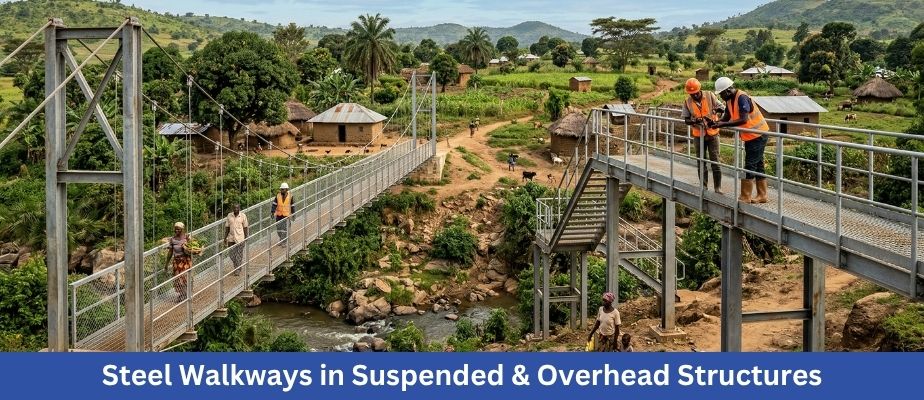
The primary function of any elevated transit system is to provide a stable, slip-resistant and weather-resistant surface. In the context of suspended bridges, where wind loads and vibration are constant variables, the material choice is critical. Steel walkways have emerged as the industry standard due to their high strength-to-weight ratio. Unlike timber or concrete, which can add excessive dead load to a suspension cable system, steel provides the necessary rigidity without compromising the bridge’s structural limits. Furthermore, the open-grid design often used in these systems allows wind to pass through, reducing the aerodynamic drag on the entire structure.

Beyond the bridges themselves, industrial walkways serve as the circulatory system of the modern factory or power plant. These paths must withstand heavy foot traffic, the weight of tools and often, exposure to corrosive chemicals. The versatility of steel allows for specialized coatings – such as hot-dip galvanization or powder coating – to ensure that these paths remain structurally sound for decades. By focusing on the interplay between material science and structural engineering, we can better appreciate how these platforms support the backbone of global infrastructure.

Need More Information?
Email Us Today!

Steel Walkways as the Foundation for Bridge Maintenance and Access

In the realm of large-scale infrastructure, the necessity for constant inspection is paramount. Suspended bridges require regular checks of cables, suspenders and towers. Steel walkways provide the essential conduit for engineers to reach these critical points safely. Because these structures are often located in coastal or high-altitude areas, the steel used is specifically treated to resist oxidation. The use of serrated gratings ensures that even in rain or icy conditions, the grip remains high, preventing slips and falls from dangerous heights.

Industrial Walkways and Its Role in Optimizing Factory Floor Space

Moving into the interior of massive production facilities, the use of overhead paths is a masterclass in spatial efficiency. Industrial walkways allow for the movement of personnel above active machinery, effectively separating human traffic from hazardous automated processes. This vertical stratification not only improves safety but also speeds up maintenance by allowing technicians to access the tops of boilers, turbines or assembly lines without needing to shut down the entire floor.

Modular walkways and the shift toward rapid deployment

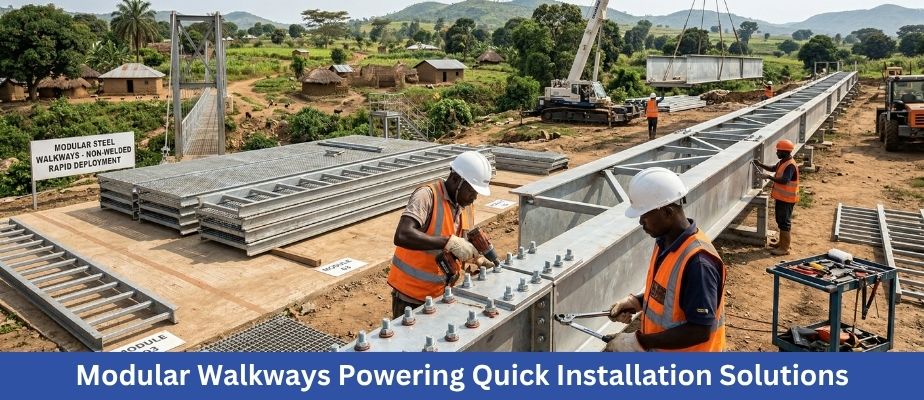
The construction industry has seen a significant shift toward pre-engineered solutions. Modular walkways represent this trend perfectly. By manufacturing sections in a controlled environment and then transporting them to the site for assembly, companies can significantly reduce the “down-time” associated with traditional welding and fabrication. These systems are designed to bolt together with precision, ensuring that the structural integrity of the platform is consistent throughout its entire length.

Steel Walkway Platforms in Complex Overhead Environments

When a simple path is not enough, steel walkway platforms offer the necessary space for staging equipment or performing complex repairs. These wider sections are integrated into the walkway system to serve as “hubs” for activity. In suspended bridge applications, these platforms might be situated at the base of the main towers, providing a flat, secure area for housing monitoring equipment or electrical boxes.

Commercial Walkways for Aesthetic and Functional Public Spaces

While industrial utility is vital, the application of these systems extends into the public sphere. Commercial walkways are often found in modern airports, stadiums and shopping centers. In these environments, the focus shifts slightly toward aesthetics, though safety remains the baseline. High-finish steel, often paired with glass or architectural mesh, creates a sleek, modern look that complements contemporary architecture while providing a durable path for the general public.

Industrial Platforms and Walkways as Comprehensive Safety Systems

Total safety compliance requires more than just a floor. Integrated industrial platforms and walkways include handrails, toe boards and non-slip surfaces as part of a unified design. For suspended bridges, this often includes fall-arrest systems built directly into the steel frame. This holistic approach to design ensures that the system meets rigorous OSHA or ISO standards, providing peace of mind for both the owner and the end-user.

Industrial Walkway Platforms for Heavy-Duty Load Requirements

In sectors like mining or oil and gas, the load-bearing requirements are significantly higher than in standard commercial settings. Industrial walkway platforms in these zones are engineered with thicker gauge steel and reinforced support beams. These systems are capable of supporting not just people, but heavy machinery parts and multiple personnel simultaneously, often under extreme vibrations or heat.

Want to Discuss?
WhatsApp Call Us Now!

Prefabricated Walkways and the Reduction of Site-Specific Hazards

Finally, the move toward prefabricated walkways has changed the safety profile of construction sites. By minimizing the amount of on-site welding and cutting, the risks of fire or falling debris are greatly reduced. These units arrive ready for installation, which is particularly beneficial when working on suspended bridges where the workspace is limited and the risks of working over water or traffic are high.

Conclusion

The evolution of elevated access is inextricably linked to the advancements in steel fabrication. From the slender, wind-resistant paths of a suspension bridge to the heavy-duty grids of an industrial plant, these systems represent a perfect marriage of form and function. As we continue to build taller and more complex structures, the reliability of our walkways will remain the literal and figurative bridge to safe operation.

FAQs

Steel offers an exceptional strength-to-weight ratio and can be perforated to allow wind and water to pass through, reducing structural stress.

These systems are pre-engineered and manufactured off-site, allowing for quick bolt-together assembly that minimizes facility downtime and on-site labor.

Most systems include serrated non-slip surfaces, integrated handrails and toe boards to prevent both personnel falls and falling equipment.

Yes, steel can be finished with various coatings or combined with glass and lighting to meet aesthetic requirements without losing its structural integrity.

Hot-dip galvanization creates a protective zinc layer that prevents rust and corrosion, ensuring the walkway remains safe for decades in harsh weather.